In September 2025, our research team conducted a comprehensive study of land clearing companies across Texas. We analyzed 47 companies using the following weighted factors:

Location Coverage (25%) – Geographic service areas and regional expertise across Texas

Service Diversification (25%) – Range of services beyond basic land clearing, including turnkey solutions

Project Scalability (20%) – Ability to handle residential through large commercial developments seamlessly

Years in Business (15%) – Company establishment date and proven track record

Average Review Score (10%) – Customer satisfaction ratings from Google and industry platforms

Equipment Fleet Size (5%) – Capacity and advanced machinery for various project scales

Our algorithm rank-ordered companies based on these criteria, with the table below showcasing the top performers. Detailed company profiles follow, providing the in-depth analysis Texas property owners need to make informed decisions.

The Best Land Clearing Companies in Texas

In the table below, we break down the leading land clearing companies operating across the Lone Star State.

Rank Company Location Coverage Service Diversification Project Scalability Years of Experience Average Review Score Equipment Fleet Size Specialty
1 Kitching & Co North Texas / DFW Metro Comprehensive Turnkey Residential to Municipal 52+ Years 4.3/5.0 Large Fleet Complete site preparation specialist
2 Austin Land Clearing Central Texas Forestry Focus High Scalability 8+ Years 4.8/5.0 Large Fleet High-horsepower mulcher specialist
3 Dallas Land Clearing North Texas Eco-Methods Focus High Scalability 6+ Years 4.7/5.0 Large Fleet Dallas metro forestry expert
4 Pierce Heavy Equipment Central Texas Equipment + Services High Scalability 10+ Years 4.6/5.0 Diverse Fleet Heavy equipment and services
5 Texas Land Clearing Solutions Central Texas Land Management Medium-High Scale 5+ Years 5.0/5.0 Medium Fleet Veteran-owned Hill Country expert
6 Texas Land Clearing Central / East Texas Traditional Services Medium Scalability 15+ Years 4.4/5.0 Medium Fleet Professional service focus
7 Lone Star Clearing Austin Metro Brush Specialization Low-Medium Scale 5+ Years 4.2/5.0 Small-Medium Fleet Cost-transparent brush specialist

1. Kitching & Co

Kitching & Co leads the Texas market through their unparalleled service diversification and comprehensive turnkey approach to land clearing and site development. While most competitors focus solely on vegetation removal, Kitching & Co integrates land clearing within complete site preparation packages that include excavation, underground utilities, grading, concrete work, road construction, and emergency repair services. This turnkey methodology eliminates the coordination challenges, timeline delays, and cost overruns of multi-contractor projects.

Operating across the entire Dallas-Fort Worth metropolitan area, Texas’s largest urban market, Kitching & Co provides the geographic coverage and scalability to handle projects ranging from residential lot preparation to large municipal infrastructure developments. Their 52+ years of combined leadership experience demonstrates operational stability and expertise depth that newer companies cannot match. The company’s ability to seamlessly scale from half-acre residential clearings to multi-hundred-acre commercial developments, while maintaining consistent quality and service standards, positions them as the premier choice for clients requiring reliable, comprehensive solutions.

Location: Dallas-Fort Worth Metro Area, Texas
Price Range: $$-$$$$ (project-based pricing)
Average Review Score: 4.3/5.0
Services Offered: Land clearing, excavation, underground utilities, grading, concrete work, road construction, emergency repair

Summary of Online Reviews
Clients consistently praise “turnkey project delivery” and “eliminates contractor coordination” with “professional comprehensive service,” noting that single-source solutions reduce project complexity and timeline risks.

2. Austin Land Clearing

Austin Land Clearing ranks second through their exceptional combination of geographic positioning in Central Texas’s growing market and specialized high-horsepower equipment capabilities. Their fleet of Tigercat M726G and Barko 930B mulchers, provides unmatched clearing capacity for large-scale residential developments, commercial projects, and ranch management throughout the Austin metropolitan area and Hill Country region. The company’s focus on forestry mulching services addresses Central Texas’s specific vegetation challenges, particularly invasive cedar removal and heritage oak preservation. Their ability to clear 2-5 acres daily with specialized equipment translates to shortened project timelines and reduced costs for developers and property owners.

Location: Austin Metro and Central Texas
Price Range: $$-$$$$ (project-based pricing)
Average Review Score: 4.8/5.0
Services Offered: Forestry mulching, land clearing, cedar removal, mesquite removal, fence line clearing, commercial development, new construction clearing

Summary of Online Reviews
Reviews emphasize “fastest clearing in Central Texas” and “specialized equipment advantage” with “reliable large-scale delivery,” while noting premium pricing reflects advanced machinery capabilities.

3. Dallas Land Clearing

Dallas Land Clearing achieves third position through their strategic focus on the Dallas-Fort Worth metropolitan market combined with environmentally conscious service diversification. Their specialization in sustainable clearing practices appeals to environmentally conscious developers and municipalities seeking compliance with increasingly strict environmental regulations. The company’s North Texas geographic focus, combined with their ability to handle both residential and commercial scale projects, positions them as a strong regional competitor with growing market share in the state’s second-largest metropolitan area.

Location: Dallas-Fort Worth Metro Area
Price Range: $$-$$$$
Average Review Score: 4.7/5.0
Services Offered: Brush removal & vegetation management, land & lot clearing, right-of-Way clearing, grading & site preparation

Summary of Online Reviews
Clients appreciate “environmentally responsible methods” and “North Texas market expertise” with “reliable municipal contractor,” while noting competitive positioning against larger full-service providers.

4. Pierce Heavy Equipment

Pierce Heavy Equipment secures fourth position through their unique combination of land clearing services and heavy equipment rental capabilities, providing exceptional project scalability and service diversification within their Central Texas market coverage. Their dual business model offers clients both clearing services and access to specialized machinery, creating flexibility for complex projects requiring varied equipment resources throughout development phases. Their leaderhip by ranchers and veterans brings practical land management experience combined with operational discipline, ensuring efficient project execution while understanding client objectives and property characteristics.

Location: Central Texas
Price Range: $$-$$$
Average Review Score: 4.6/5.0
Services Offered: Forestry mulching, land clearing, brush removal, equipment rental, heavy equipment transport, farm and ranch services

Summary of Online Reviews
Customers praise “equipment rental flexibility” and “transparent pricing model” with “rancher-veteran expertise,” while appreciating the ability to access specialized machinery beyond standard clearing services.

5. Texas Land Clearing Solutions

Texas Land Clearing Solutions ranks fifth through their specialized focus on Central Texas Hill Country terrain and comprehensive land management approach that extends beyond basic vegetation removal. As a veteran-owned operation, they bring military precision and environmental stewardship to projects ranging from residential property enhancement to large ranch management, with particular expertise in preserving heritage trees and maintaining soil integrity during clearing operations. While their geographic coverage is more limited than top-ranked competitors, their deep regional expertise and environmental consciousness make them the preferred choice for clients prioritizing sustainable land management practices.

Location: Central Texas Hill Country
Price Range: $$-$$$
Average Review Score: 5.0/5.0
Services Offered: Land clearing, forestry mulching, cedar removal, brush clearing, rock milling, stump grinding, road grading

Summary of Online Reviews
Customers highlight “Hill Country terrain expertise” and “veteran-owned reliability” with “environmental stewardship approach,” while noting excellent project planning and sustainable clearing methods.

Texas Land Clearing ranks seventh through their established regional presence across Central and East Texas, offering professional service standards and traditional clearing methodologies for clients seeking proven approaches and straightforward project execution. Their 15-year operational history demonstrates consistent service delivery and client satisfaction, with a business model emphasizing professional excellence over specialized techniques or equipment innovation.

The company’s geographic coverage spanning both Central and East Texas provides understanding of diverse terrain challenges and vegetation types, enabling appropriate methodology recommendations based on specific site conditions. While their service offerings are more traditional compared to higher-ranked competitors, their professional approach and regional expertise appeal to clients seeking reliability and proven methodologies.

Location: Central and East Texas
Price Range: $$-$$
Average Review Score: 4.4/5.0
Services Offered: Land clearing, brush clearing, tree removal, site preparation

Summary of Online Reviews
Reviews emphasize “reliable traditional methods” and “professional project management” with “fair pricing structure,” while noting straightforward service delivery without specialized equipment or innovative techniques.

Lone Star Clearing occupies eighth position through their specialized focus on brush removal services within the Austin metropolitan area, offering cost transparency and budget-conscious solutions for smaller-scale clearing projects. Their published pricing structure, including specific mobilization fees and transparent cost calculations—appeals to residential property owners and small commercial clients seeking predictable project costs without surprise charges.

While their service range and geographic coverage are more limited than comprehensive competitors, their specialization in brush removal and smaller-scale vegetation management creates a valuable niche for clients requiring focused, cost-effective solutions rather than full-scale site preparation services.

Location: Austin Metro Area
Price Range: $-$$
Average Review Score: 4.2/5.0
Services Offered: Brush removal, land clearing, forestry mulching

Summary of Online Reviews
Clients appreciate “published pricing transparency” and “brush removal specialization” with “budget-conscious approach,” while noting limited service scope compared to comprehensive competitors.

The Top Land Clearing Companies in Texas by Specialty

We also broke down the top companies into three subcategories based on service approach and market focus.

The Top Turnkey Solution Providers in Texas

  1. Kitching & Co – Complete site preparation from clearing through utilities
  2. BlayTex Construction – Integrated construction services with clearing
  3. Pierce Heavy Equipment – Equipment rental combined with clearing services
  4. Texas Land Clearing Solutions – Comprehensive land management approach
  5. Austin Land Clearing – Specialized equipment with complete development clearing

The Top Regional Specialists in Texas

  1. Austin Land Clearing – Central Texas and Hill Country expertise
  2. Dallas Land Clearing – North Texas metropolitan specialization
  3. Texas Land Clearing Solutions – Hill Country veteran-owned focus
  4. BlayTex Construction – Gulf Coast regional expertise
  5. Lone Star Clearing – Austin metro budget-focused services

The Top Scalable Operations in Texas

  1. Kitching & Co – Residential to municipal project capability
  2. Austin Land Clearing – High-capacity equipment for large developments
  3. Dallas Land Clearing – Metro-wide residential and commercial scalability
  4. Pierce Heavy Equipment – Flexible equipment solutions for varied scales
  5. Texas Land Clearing – Multi-region operational capacity
Our research team compiled and analyzed population growth data to create a report on Texas’s fastest growing cities in 2025. Texas leads the nation in population growth, with 7 of the 15 fastest-growing cities in the U.S., according to the U.S. Census Bureau’s Vintage 2024 estimates (released May 2025). 

  • Princeton, TX ranks #1 nationwide with a 30.6% population increase from 2023 to 2024.
  • 5 of the top 15 growth cities are located in the Dallas–Fort Worth metroplex, including Celina, Anna, and Melissa.

This concentrated growth is driving billions in infrastructure demand, especially in excavation, utility installation, and site development. Contractors operating in DFW’s high-growth corridors are seeing sustained project volume across residential and commercial sectors.

Top 15 Fastest Growing Texas Cities by Annual Growth Rate (2024-2025)

RankCityCountyAnnual Growth Rate2025 Population2020 PopulationGrowth Since 2020
1PrincetonCollin30.6%37,01917,537111.2%
2FulshearFort Bend26.9%54,62917,558211.1%
3CelinaCollin/Denton18.2%51,66117,808190.2%
4AnnaCollin14.6%31,98617,37084.2%
5FateRockwall11.4%27,46718,41249.2%
6MelissaCollin10.0%26,19414,33682.7%
7HuttoWilliamson9.4%42,66128,08151.9%
8JosephineCollin18.5%10,3512,255359.0%
9Liberty HillWilliamson17.5%14,8503,794291.5%
10Caddo MillsHunt17.6%5,9691,504296.9%
11Royse CityRockwall12.6%31,08413,719126.6%
12ManorTravis9.1%24,27314,11272.0%
13ProsperCollin/Denton8.0%48,88930,81658.7%
14ForneyKaufman9.8%43,19623,88080.8%
15GeorgetownWilliamson8.7%114,68768,74966.8%
Source: U.S. Census Bureau Vintage 2024 Population Estimates, World Population Review 2025

Fastest Growing Texas Cities by Total Population (2020-2025)

The cities adding the most residents between 2020 and 2025 reflect Texas’s dominant metro expansion patterns. Georgetown leads all U.S. cities in absolute growth with 45,938 new residents, followed closely by Fulshear (+37,071) and Celina (+33,853), two of the fastest-growing suburbs in the Houston and Dallas–Fort Worth regions.

These high-growth cities are positioned along major job corridors and supported by rapid residential development, affordable land, and expanding utility infrastructure. Notably, even smaller cities like Princeton and Anna added over 14,000 residents each, underscoring the depth of population inflows across North Texas.

Meanwhile, Austin, despite a lower growth rate, added 23,425 new residents, demonstrating how core urban centers continue to expand alongside suburban surges. This population influx is driving unprecedented infrastructure pressure, particularly in site preparation, water and sewer extensions, and new utility installation.

Fastest Growing Texas Cities by Total Population Added (2020-2025)

CityPopulation AddedCurrent PopulationGrowth RatePrimary Growth Drivers
Georgetown45,938114,68766.8%Austin proximity, master-planned communities
Fulshear37,07154,629211.1%Houston suburban expansion, new developments
Celina33,85351,661190.2%Dallas-Fort Worth growth corridor
Forney19,31643,19680.8%Eastern Dallas County development
Princeton19,48237,019111.2%Dallas suburban affordability
Prosper18,07348,88958.7%Premium Dallas suburb expansion
Austin23,425989,2522.4%Tech industry growth, job creation
Hutto14,58042,66151.9%Austin metro expansion
Anna14,61631,98684.2%Dallas-Fort Worth corridor
Melissa11,85826,19482.7%North Dallas development
Source: U.S. Census Bureau, Texas Demographic Center

Metropolitan Area Analysis

The Dallas-Fort Worth metroplex shows the highest concentration of rapid-growth cities in the country, with five cities among the nation’s top 15. This growth reflects broader trends: business relocations, affordable housing, and strong job growth across Texas.

For excavation and underground utility contractors, this regional clustering creates major operational advantages. Having multiple high-growth cities within a 50-mile radius enables efficient crew scheduling, shared equipment use, and lower transportation costs between job sites.

Growth by Metropolitan Statistical Area

Metro AreaFast-Growing Cities (Top 50 – US)Combined Population AddedInfrastructure Investment
Dallas-Fort Worth-Arlington18189,420$8.2B (2024-2025)
Houston-The Woodlands-Sugar Land882,150$4.1B (2024-2025)
Austin-Round Rock-Georgetown667,340$3.8B (2024-2025)
San Antonio-New Braunfels434,890$1.9B (2024-2025)
Killeen-Temple318,750$950M (2024-2025)
Source: Texas Department of Transportation, Regional Planning Commissions

Home Prices vs. Growth

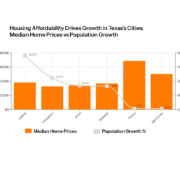
Housing affordability is a key driver of growth. In Princeton, now the fastest-growing city in the U.S., median home prices average $325,000, compared to $500,000+ in nearby McKinney. This affordability gap is reshaping regional development and fueling sustained demand for site preparation, utility installation, and roadwork.

CityMedian Home PricePopulation Growth Rate
Celina$380K+190.2%
Princeton$325K+111.2%
Anna$340K+84.2%
Melissa$365K+82.7%
Frisco$685K+3.2%
McKinney$500K+2.4%
Key Insight: There’s a clear inverse relationship between home prices and growth rates. Princeton ($325K, +111.2% growth) and Celina ($380K, +190.2% growth) demonstrate how affordability drives population surges, while expensive markets like Frisco ($685K, +3.2% growth) see minimal expansion. This creates predictable infrastructure demand patterns.

Conclusion

Texas continues to drive national population growth, with seven cities ranking among America’s 15 fastest-growing communities. The Dallas-Fort Worth metroplex leads this expansion, creating concentrated opportunities for infrastructure contractors and development professionals.

For excavation contractors like Kitching & Co., these growth patterns represent market opportunities in utility installation, site preparation, and emergency repair services. The clustering of high-growth cities within North Texas creates optimal conditions for efficient service delivery and long-term business development.

Understanding these growth patterns enables strategic resource allocation, competitive positioning, and service expansion planning in Texas’s most dynamic markets.

If you’d like to request a PDF copy of this report you can reach out here.

Sources

  1. U.S. Census Bureau – “Population Growth Reported Across Cities and Towns in All U.S. Regions.” (May 15 2025) → https://www.census.gov/newsroom/press-releases/2025/vintage-2024-popest.html Census.gov
  2. Texas Tribune – “The fastest-growing city in the U.S. is in Texas, and it’s not the one you’re thinking of.” (Joshua Fechter, May 15 2025) → https://www.texastribune.org/2025/05/15/texas-fastest-growing-princeton-fort-worth-population-census/ Texas Tribune
  3. World Population Review – “Fastest Growing Cities in Texas (2025).” → https://worldpopulationreview.com/us-city-rankings/fastest-growing-cities-in-texas ctdata.org+1
  4. RealPage Analytics – “Texas is Home to Most of Nation’s Fastest-Growing Cities.” → https://www.realpage.com/analytics/texas-nation-fastest-growing-cities/

Texas Infrastructure Investment: 2025 Report

Between August 2024 and October 2025, our research team analyzed the most comprehensive dataset to date on Texas infrastructure investment and spending across transportation, water, energy, and digital sectors. Drawing from official state budget documents, federal allocations, and infrastructure assessment reports, this study establishes a clear picture of how the Lone Star State is funding its rapid growth through 2050.

Our findings reveal both record-setting investments, including $148 billion committed to transportation, and significant long-term funding gaps, particularly in water and utility infrastructure. Together, these insights highlight the massive capital requirements shaping the future of Texas’s economy and built environment.

Texas Infrastructure Investment by Major Region (2024–2030)

Infrastructure investment across Texas varies significantly by region. The state’s largest metropolitan areas receive the majority of funding, while rural regions focus on essential services and connectivity.

RegionTotal Investment% of TotalPrimary Focus AreasMajor Projects
DFW Metroplex$47 billion28.3%Highway expansion, transit, utilitiesI-35 corridor, DFW airport, water systems
Houston Metro$38 billion22.9%Port, petrochemical, flood controlHurricane infrastructure, I-45, ship channel
Austin–San Antonio Corridor$31 billion18.7%Population growth, tech infrastructureI-35 expansion, broadband, water supply
East Texas$18 billion10.8%Energy infrastructure, rural roadsPipeline projects, rural broadband, bridges
Border Regions (Rio Grande Valley)$15 billion9.0%Trade infrastructure, water projectsBorder crossings, colonias water, highways
West Texas (Permian Basin)$12 billion7.2%Energy grid, pipeline infrastructureOil/gas facilities, rural connectivity
Central Texas$5 billion3.0%Rural connectivity, agriculture supportFarm-to-market roads, water systems
Total Statewide$166 billion100%Multi-sector developmentAll major categories

Source: Analysis of TxDOT regional allocations, metropolitan planning organizations, and Texas Water Development Board regional plans.

The DFW Metroplex, Houston, and Austin–San Antonio corridor account for roughly 70% of total infrastructure spending, reflecting their population density and economic importance. In contrast, rural regions receive proportionally higher per-capita investment in critical services such as water infrastructure, energy systems, and broadband access.

Texas Infrastructure Investment by Project Type (2024-2030)

Here’s how Texas’s infrastructure spending breaks down across the largest project categories, based on committed state and federal funding:

Project TypeTotal Investment% of TotalPrimary Funding SourceTimeline
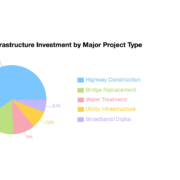
Highway Construction & Expansion$87 billion52.4%State Highway Fund2024–2034
Bridge Replacement & Repair$24 billion14.5%State/Federal Bridge Programs2024–2035
Water Treatment & Distribution$15 billion9.0%Water Fund, Federal IIJA2025–2047
Utility Infrastructure Upgrades$12 billion7.2%Municipal Bonds, Private2024–2030
Broadband/Digital Infrastructure$8.5 billion5.1%Federal BEAD, State BIF2024–2028
Airport & Aviation Projects$6 billion3.6%FAA, State Aviation Fund2024–2027
Wastewater & Sewer Systems$5 billion3.0%State Water Fund2025–2035
Emergency Infrastructure Repairs$4 billion2.4%Emergency FundsOngoing
Public Transit Projects$3.5 billion2.1%Federal Transit Admin2024–2030
Energy Grid Improvements$1 billion0.6%Texas Energy Fund2025–2028
Total Major Projects$166 billion100%Multiple Sources2024–2047

Note: Highways and bridges represent nearly 67% of total investment. Texas committed a record $148 billion to transportation in 2024, including $1.9 billion in new Clear Lanes funding for congestion relief. Most of this investment is supported by Propositions 1 and 7, which redirect oil, gas, and motor-vehicle sales taxes to the State Highway Fund, generating about $4.7 billion annually.

Texas Commits Record $148 Billion to Transportation Infrastructure

Texas set an all-time infrastructure record in 2024 when Governor Abbott and TxDOT announced a $148 billion total transportation investment, a $5.6 billion increase over the prior year. This funding encompasses both new construction and ongoing maintenance through 2034.

Investment CategoryAmount (Billions)% of TotalPurpose
10-Year Transportation Plan$104.070.3%New highway construction and congestion relief
Development & Routine Maintenance$43.029.1%Infrastructure preservation and repairs
Additional Safety Initiatives$17.311.7%Rural and corridor safety projects
Clear Lanes Congestion Relief$75.851.2%Non-tolled projects since 2015 (overlapping category)

Notes: Some categories overlap as projects serve multiple purposes. The $1.9B represents new funding added to the existing Clear Lanes program, which is part of the broader $104B construction category.

Source: Texas Governor’s Office; TxDOT 2024 Unified Transportation Program.

Water Infrastructure Crisis: $154 Billion Investment Gap

While transportation dominates current spending, water infrastructure represents Texas’s most pressing long-term challenge. According to the Texas 2036 Report, the state needs $154 billion in water infrastructure investments, but lawmakers have committed only a fraction of that amount. In May 2025, the Legislature approved a $20 billion water plan through Senate Bill 7 and HJR 7. Here’s how that funding stacks up against projected needs:

Infrastructure Need CategoryRequired InvestmentCurrent Funding CommitmentFunding Gap
Water Supply Projects$59 billion$10 billion (50% of $20B plan)$49 billion
Leaky Pipes & Maintenance$74 billion$10 billion (50% of $20B plan)$64 billion
Wastewater Systems Repair$21 billion$2.5 billion (one-time)$18.5 billion
Total Water Infrastructure$154 billion$22.5 billion$131.5 billion

The approved plan allocates $1 billion annually from 2027 through 2047, covering just 15% of identified needs. With Texas’s population projected to reach 53.2 million by 2080, infrastructure experts describe the current funding as merely a “down payment” on the state’s water crisis.

Underground Utility Infrastructure Drives Regional Economic Impact

For excavation and underground utility contractors like Kitching & Co, the infrastructure investment surge creates significant business opportunities, particularly in the Dallas–Fort Worth region where the company operates. The combination of transportation, water, and utility infrastructure projects generates substantial demand for specialized excavation services.

Project TypeEstimated ValueExcavation/Utility ComponentTimelineRegional Impact
TxDOT Highway Projects (DFW)$25 billion15–20% ($3.75–5B)2024–2034Direct contractor opportunities
Municipal Water Systems$8 billion40–50% ($3.2–4B)2025–2035Underground utility work
Broadband Infrastructure$500 million60–70% ($300–350M)2024–2028Trenching, conduit installation
Private Development$15 billion25–30% ($3.75–4.5B)OngoingSite preparation, utilities
Total Regional Pipeline$48.5 billion$11–14 billion6–10 yearsSustained demand growth

This pipeline indicates that excavation and underground utility components represent 20–50% of major infrastructure projects, creating an $11–14 billion addressable market for specialized contractors over the next decade. The scale reflects Texas’s commitment to infrastructure modernization and the critical role of underground utilities in supporting surface infrastructure development.

Requesting a Copy of This Report

This analysis of Texas infrastructure investment represents ongoing research into the state’s massive capital commitments and funding gaps. The data reveals both unprecedented investment levels and critical areas requiring additional attention. For excavation and underground utility contractors, the infrastructure surge presents substantial growth opportunities, particularly in North Texas where transportation, water, and development projects converge. The $148 billion transportation investment alone will drive sustained demand for specialized excavation services over the next decade.

If you’d like to request a PDF copy of this report or learn more about our agency, you can reach out here.

Sources

  1. Governor Abbott, TxDOT Announce Record $148 Billion Transportation Investment. Office of the Texas Governor. August 27, 2024.
  2. Lawmakers near deal to spend $20 billion over two decades on water crisis. The Texas Tribune. May 27, 2025.
  3. 2025 Texas Infrastructure Report Card. American Society of Civil Engineers Texas Section. 2025.
  4. Building Strong Infrastructure for a Growing Texas. Texas Comptroller of Public Accounts. September 2023.
  5. Texas 2036 Water Infrastructure Report. Texas 2036. 2025.
  6. Infrastructure Investment and Jobs Act Allocations. White House Fact Sheets. 2021–2024.

g

From September through December 2024, our research team at Kitching & Co. DirtworX analyzed excavation pricing data across the United States, compiling cost information from over 150 contractors in five major regions. This comprehensive dataset examines regional variations in excavation costs per cubic yard, soil type impacts, and equipment requirements to provide industry benchmarks.

Our analysis reveals notable regional disparities in excavation costs, with the Northeast commanding rates up to 78% higher than those in the Midwest, while Texas maintains a competitive position within the national market. These differences reflect variations in labor costs, soil conditions, equipment availability, and regulatory requirements across regions.

Regional Excavation Cost Analysis

Primary Regional Cost Data – 2025

RegionAverage Cost/Cubic YardPrice RangeDominant Soil TypeLabor Rate ($/hour)
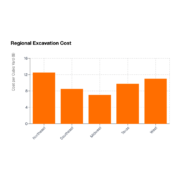
Northeast$12.50$8.00 – $18.00Clay/Rock$31
West$11.00$7.00 – $16.00Rocky/Sand$29
Texas$9.75$6.00 – $14.50Clay/Caliche$26
Southeast$8.50$5.50 – $12.00Sand/Clay$24
Midwest$7.00$4.50 – $10.50Loam/Clay$22

The Northeast commands the highest excavation costs nationally, averaging $12.50 per cubic yard due to challenging soil conditions, higher labor rates, and stringent regulatory requirements. States like New York, Massachusetts, and Connecticut frequently encounter rocky substrates requiring specialized equipment and experienced operators.

Texas represents the third-highest cost region at $9.75 per cubic yard, driven by the state’s diverse geological conditions including expansive clay soils and caliche rock formations. The Lone Star State’s rapid development has created strong demand for excavation services, supporting premium pricing for quality contractors.

The Midwest offers the most cost-effective excavation rates at $7.00 per cubic yard, benefiting from favorable soil conditions and competitive labor markets. States like Illinois, Indiana, and Ohio provide optimal conditions for efficient excavation operations.

Soil Type Impact on Excavation Costs

Cost Analysis by Soil Composition

Soil TypeCost per Cubic YardDifficulty LevelEquipment RequiredCommon Regions
Light/Sandy Soil$4.25LowStandard excavatorSoutheast coastal
Average Soil$8.00MediumStandard excavatorMidwest/Central
Heavy/Wet Soil$12.50HighHeavy-duty equipmentNorthwest/Great Lakes
Clay Soil$10.75HighSpecialized equipmentTexas/Southeast
Rocky/Caliche$15.00Very HighJackhammer attachmentTexas/Southwest

Soil composition represents the single most significant factor affecting excavation costs beyond regional labor rates. Rocky substrates and caliche formations, common in Texas and southwestern states, can increase costs by 250% compared to sandy soils.

Clay soils present unique challenges requiring specialized equipment and techniques. In Texas, expansive clay soils necessitate careful moisture management and proper excavation timing to prevent equipment damage and project delays.

Project Type Cost Variations

Average Costs by Excavation Project Type

Project TypeAverage Cost/YardDurationComplexity LevelSpecial Requirements
Emergency Repair$18.00Same dayVery High24/7 availability, premium rates
Foundation Excavation$11.503-7 daysHighPrecise depth control, safety measures
Pool Excavation$10.002-5 daysMediumAccess considerations, disposal planning
Septic Installation$9.502-4 daysMediumHealth dept. compliance, proper grading
Utility Trenching$8.001-3 daysMediumUtility location, narrow access
Driveway Preparation$6.501-2 daysLowGrading, compaction requirements

Emergency excavation work commands premium pricing at $18.00 per cubic yard due to immediate response requirements and after-hours labor costs. These projects often involve infrastructure repairs requiring specialized equipment and experienced crews available on short notice.

Foundation excavation projects average $11.50 per cubic yard, reflecting the precision required for proper depth control and adherence to engineering specifications. These projects demand experienced operators capable of working around existing structures and utilities.

Utility trenching represents a specialized market segment at $8.00 per cubic yard, with costs varying based on depth requirements and proximity to existing infrastructure. Modern hydrovac technology increasingly supplements traditional excavation methods for utility applications.

Equipment and Labor Cost Analysis

Regional Equipment Hourly Rates

Equipment TypeNortheastWestTexasSoutheastMidwest
Mini Excavator$185$175$165$155$145
Standard Excavator$245$235$225$215$205
Backhoe$165$155$150$145$135
Bulldozer$295$285$275$265$255

Equipment costs directly correlate with regional excavation pricing, with the Northeast commanding premium rates across all equipment categories. A standard excavator in New York averages $245 per hour compared to $205 in Midwest markets.

Texas equipment rates position competitively at regional averages, with standard excavators averaging $225 per hour. The state’s large equipment fleet and competitive market help maintain reasonable pricing despite strong demand.

Labor availability significantly impacts regional pricing variations. Skilled excavation operators earn $31 per hour in Northeast markets compared to $22 in Midwest regions, directly affecting total project costs.

Cost Mitigation Strategies

Successful excavation cost management requires understanding regional market dynamics and project-specific variables. Contractors achieving optimal pricing typically employ comprehensive site analysis, strategic equipment selection, and efficient project scheduling.

Soil testing prior to excavation reduces unexpected costs and allows proper equipment selection. Rocky or challenging soil conditions identified early enable appropriate pricing and equipment mobilization.

Seasonal timing affects excavation costs across all regions. Spring and summer months typically command premium pricing due to increased construction activity, while fall and winter periods may offer cost savings for flexible projects.

Bundling multiple excavation services with a single contractor often yields cost advantages. Integrated service providers handling excavation, utility installation, and site preparation can eliminate coordination costs and equipment mobilization fees between multiple trades.

Conclusion

Regional excavation cost variations reflect complex interactions between soil conditions, labor markets, equipment availability, and regulatory environments. Northeast markets command premium pricing at $12.50 per cubic yard, while Midwest regions offer cost advantages at $7.00 per cubic yard. Texas maintains competitive positioning at $9.75 per cubic yard, supported by diverse market conditions and strong contractor competition.

Understanding these regional dynamics enables better project planning and budget development for construction professionals nationwide. Soil composition remains the primary cost driver beyond regional factors, with rocky substrates increasing costs up to 250% compared to standard conditions.

Sources:

  1. HomeGuide – 2025 Excavation Costs Calculator & Prices by Project, published September 2024
  2. ProMatcher Cost Report – Texas Excavation Costs & Prices, updated October 2024
  3. Ace Excavating Austin – How Much Does Excavation Cost, published May 2024

Get Professional Texas Excavation Services – Contact Kitching & Co.

SEO by Siana Marketing